
In short
Start with how many cups you need a day and how good the coffee must be. Bean-to-cup machines grind fresh beans and suit offices and customer areas; instant (soluble) machines are cheaper and faster for high-volume staff areas. Then check water supply (plumbed or tank), menu, cup size, payment method and who will clean and service the machine.
Bean-to-cup vs instant
| Bean-to-cup | Instant / soluble | |
|---|---|---|
| Coffee quality | Fresh espresso-based drinks | Good, consistent |
| Cost per cup | Higher | Lower |
| Speed | Slower | Faster |
| Maintenance | More (brewer, grinder) | Less |
| Best for | Offices, clinics, hotels | Factories, staff canteens |
Six questions to answer first
- Cups per day? Estimate 2 cups per person per day in offices; choose a machine rated comfortably above that.
- Water? A plumbed connection with a filter is best; a tank model works where plumbing is hard.
- Menu? Espresso, cappuccino, latte, tea, karak, hot chocolate — and sugar options.
- Cups or mugs? Cup dispensers suit public areas; mug-friendly spouts suit offices.
- Payments? Free-vend for staff, coins, or cashless.
- Service? Who cleans daily, and who descales and repairs?
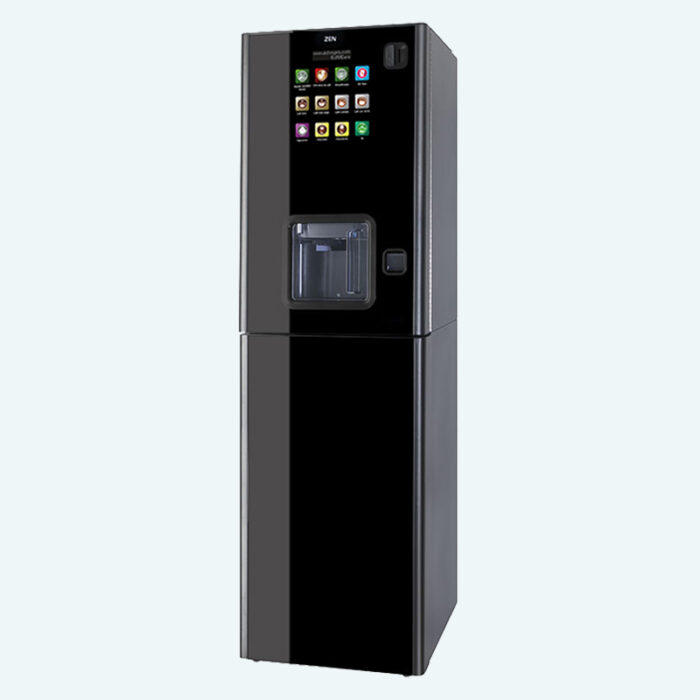
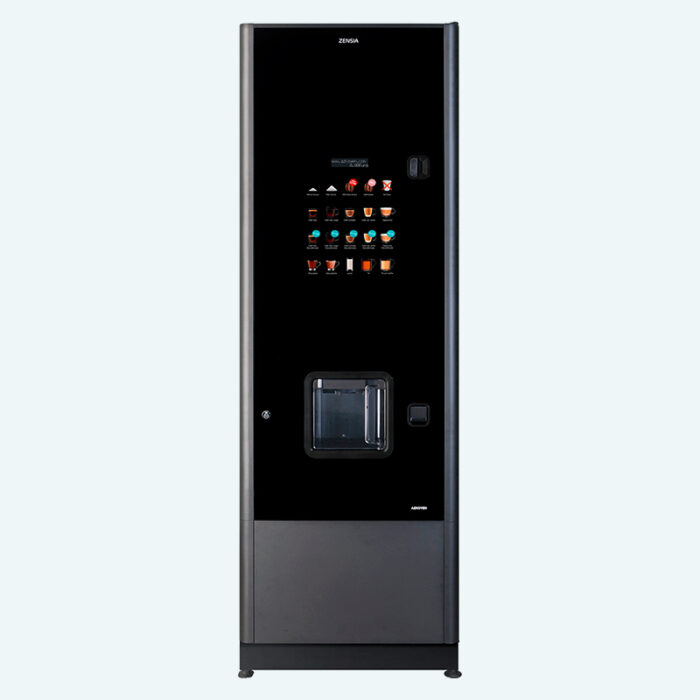
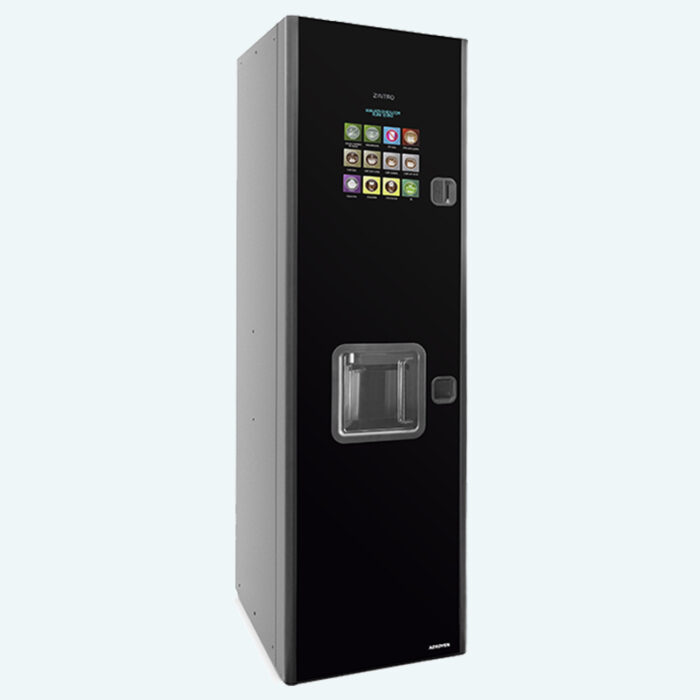
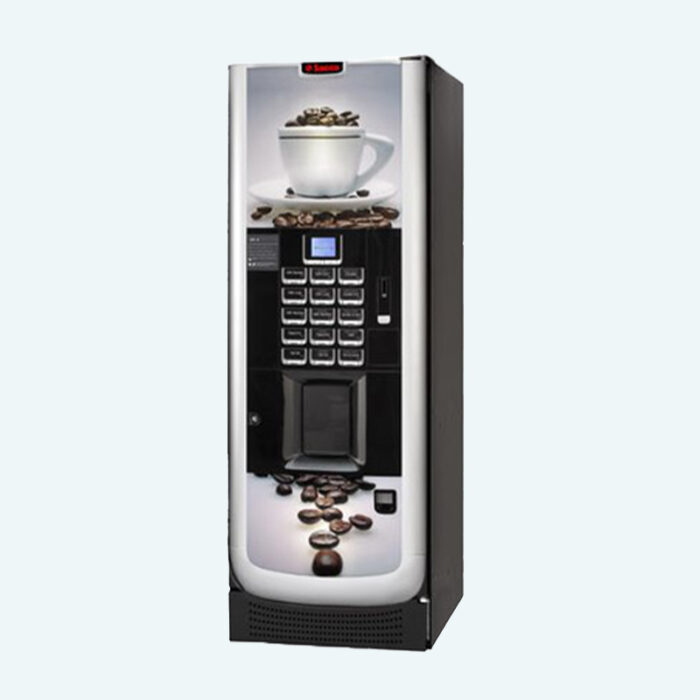
Coffee machines we carry
Coffee machine questions
Bean-to-cup or instant: which should I choose?
Bean-to-cup gives the best taste and suits offices that care about quality. Instant machines are faster, simpler to maintain and cheapest per cup, which suits high-volume and shift sites.
Does a coffee vending machine need a water connection?
Floor-standing machines usually connect to the water supply through a filter. Many table-top models use a refillable tank, so they work where there is no water point.
How much cleaning does a coffee machine need?
A rinse and waste empty every day, a wash of the mixing parts every week and periodic descaling. It takes minutes and prevents most faults.